




Artificial Turf Installation in Austin, TX: Base Engineering and Infill Specification Standards
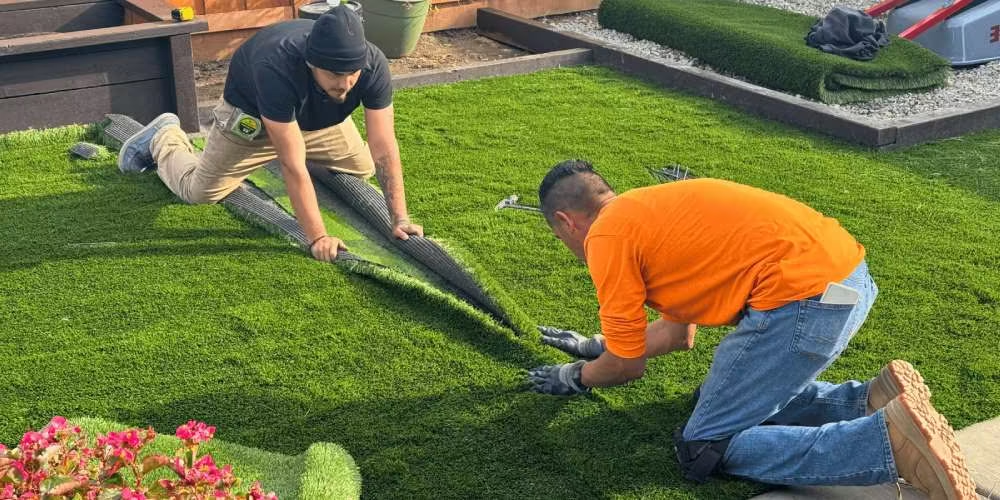
Are you planning artificial turf installation for your Austin property and trying to understand what separates a properly engineered turf system from the production installs that look acceptable at completion but drain poorly, retain odor, or develop uneven surfaces within a few seasons? Artificial turf installation is a category where the base and drainage engineering beneath the visible turf surface determines nearly everything about long-term performance, since the turf product itself is only as good as the foundation supporting it.
At Doddridge Landscaping, artificial turf design and installation is part of our artificial turf service across Austin. Here is what proper installation actually involves.
Base Excavation and Drainage Design
Excavation depth specification typically removes three to four inches of existing soil or turf, accounting for both the compacted aggregate base layer and the turf and infill system above it, with additional depth specified for areas requiring enhanced drainage given Austin's clay soil and periodic intense rainfall.
Base aggregate specification uses a compactable, well-draining crushed aggregate, commonly decomposed granite or a similar angular base material, compacted in lifts to 90 to 95 percent standard Proctor density, providing both the structural stability and drainage capacity the turf system depends on.
Perforated drain pipe integration beneath the base layer, connected to a proper discharge point, addresses subsurface water movement specifically in areas where Austin's clay soil beneath the excavation doesn't drain adequately on its own, preventing water from becoming trapped beneath the turf system and causing odor or degradation issues over time.
Slope specification maintains a minimum one to two percent grade across the base layer directing surface water toward drainage points rather than allowing it to pool beneath the turf, calculated and verified during base construction before turf installation begins.
Turf Product and Infill Specification
Turf pile height and density specification varies by application, shorter, denser pile turf for high-traffic areas or putting green applications, and taller, more natural-appearing pile for general landscape and play area applications, selected based on the specific use the installation area will see.
Infill specification uses silica sand as a baseline product providing weight and fiber support, with zeolite infill specified for pet-heavy households given its odor-absorbing properties, or specialty cooling infill specified for areas receiving intense direct sun exposure where surface heat retention is a genuine comfort concern during Austin summers.
UV stabilization specification for the turf product itself matters significantly given Austin's intense summer sun exposure, with turf products rated for high-UV environments resisting the fading and fiber degradation that lower-grade products experience faster under sustained Texas sun than they would in milder climates.
Edge and Seam Construction
Edge restraint specification, similar to paver patio construction, secures the turf's perimeter against a rigid edge material or into a concrete or paver border, preventing edge lifting and infill migration at the installation's boundaries.
Seam construction specification, for installations requiring multiple turf rolls, uses seaming tape and adhesive specifically formulated for synthetic turf backing, with seams positioned and glued to minimize visibility and prevent separation under foot traffic over the installation's service life.
Installation Sequence
Excavation and base compaction proceed in the specified lifts, with density verification on larger installations confirming adequate compaction before drain pipe and aggregate work is considered complete.
Turf placement and seaming follow base preparation, with turf rolled out, allowed to relax and acclimate to ambient temperature before cutting and seaming, since cutting turf while it's contracted from cold storage can produce seam gaps once the material expands to ambient temperature.
Infill application and brooming complete the installation, with infill distributed evenly across the surface and worked into the turf fibers through mechanical brooming, standing fibers upright and settling infill to its designed depth for proper drainage and cushioning performance.
What Artificial Turf Installation Costs
Standard residential artificial turf installation, including proper base excavation, drainage, and mid-grade turf product, typically costs 10 to 16 dollars per square foot. Premium installations with enhanced drainage engineering, specialty infill, and higher-grade turf products typically run 16 to 24 dollars per square foot depending on the specific application and site conditions.
Why Base Engineering Determines Long-Term Performance
Artificial turf installed over an inadequately compacted or poorly drained base frequently develops low spots, standing water after rain, or odor issues within the first year or two of use, problems that trace directly back to base construction rather than the turf product itself. Proper base engineering, though entirely invisible once the turf is installed, is what determines whether the installation performs reliably for its full 15-plus year expected service life.
The team at Doddridge Landscaping installs artificial turf across Austin with the base engineering and drainage integration our region's clay soil genuinely requires.

Planning artificial turf installation for your Austin property? Reach out to Doddridge Landscaping today.
.svg)
.svg)
.svg)

.svg)