




Irrigation System Installation in Austin, TX: What Proper Design Actually Requires
Are you planning irrigation system installation on your Austin property, a new system on a property without one or a replacement of a system that has reached the end of its service life, and trying to understand what separates a properly designed, correctly specified system from the production installs that satisfy basic coverage while leaving efficiency and durability questions unaddressed? Austin irrigation installation is one of the outdoor improvement categories where the gap between adequate and excellent is most consequential, because the system installed once is expected to serve the property correctly for 15 to 20 years, and it either accomplishes that or becomes the source of coverage failures, water waste, and compliance exposure that correction after the fact is more expensive to fix than correct design would have been at installation.
At Doddridge Landscaping, irrigation design and installation is part of our irrigation systems service across the Austin and Hill Country market. Here is what proper irrigation system installation actually involves.
The Design Phase That Determines System Performance
Site assessment before design covers the actual sun and shade conditions across the property, the specific plant water demand profiles, the soil conditions, expansive clay throughout most of Austin, that affect head selection and precipitation rate requirements, existing hardscape and landscape layout that determines head placement and mainline routing, and the water supply connection that establishes available pressure and flow.
Zone layout based on water demand separates areas with different requirements into independently scheduled zones, full-sun turf zones separated from shaded ornamental drip zones, newly planted areas separated from established plantings, and any zones with distinct soil or slope conditions given Austin's variable Hill Country terrain. As Blog 3 establishes for retaining wall drainage on sloped properties, irrigation zoning on graded lots needs to account for the same slope-driven runoff patterns that affect wall drainage design, since misaligned zoning on a slope produces the same runoff waste that oversized head spacing produces on flat ground.
Hydraulic design calculation confirms the water supply connection provides adequate pressure and flow for the specified zones, that mainline pipe sizes support required flow rates, and that pressure at every head falls within the operating range delivering rated performance. Austin residential connections typically provide 40 to 70 PSI at 8 to 18 gallons per minute, the parameters the hydraulic design uses to confirm the system operates within supply capacity.
Component Specification for Austin's Clay Soil and Climate
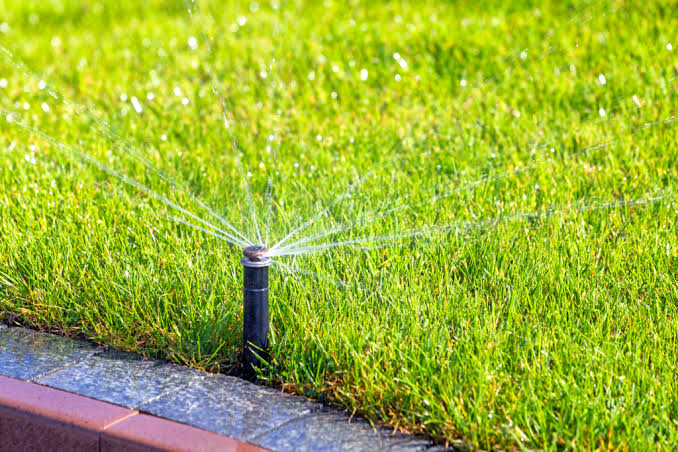
Head selection for Austin turf zones follows a rotary nozzle specification suited to clay soil conditions, MP Rotator and R-VAN products applying water at a 0.4 to 0.7 inch per hour precipitation rate compatible with our clay's slow infiltration. Standard fixed-spray heads apply water at 1.5 to 2.0 inches per hour, three to four times faster than Austin clay can absorb, producing surface runoff and requiring cycle-and-soak programming that rotary nozzles largely eliminate.
Drip emitter specification for xeriscape and ornamental beds uses pressure-compensating emitters, Netafim and Rain Bird XFS product lines, maintaining rated flow regardless of pressure variation across the drip run, at flow rates matched to clay soil's absorption capacity.
Controller specification uses ET-based smart controller platforms, Hunter Hydrawise, Rachio 3, and Rain Bird ESP-TM2 for residential applications, adjusting zone run times automatically based on Austin's actual evapotranspiration data and integrating with the City of Austin's watering restriction schedules during drought stages.
Valve specification uses commercial-grade solenoid valves, Hunter PGV and Rain Bird PESB in appropriate flow ratings, with UV-stabilized valve bodies and diaphragm compounds suited to our water chemistry and continuous-duty solenoid ratings for Austin's ambient summer temperatures.
Backflow prevention specification confirms the device type and testing requirements Austin Water's utility standards specify for residential and commercial connections, a reduced pressure zone assembly or pressure vacuum breaker depending on connection type and cross-connection risk classification.
Installation Sequence
Mainline installation happens before surface disturbance that would complicate routing, trenched before hardscape installs over its route, with conduit sleeves placed beneath any hardscape crossings. Mainline depth in Austin residential irrigation follows a 10 to 12 inch range, providing frost protection for our region's occasional hard freezes while staying above the utility conflicts common in densely developed lots.
Zone valve installation places valves in accessible valve box locations at correct finish grade, with zone identification documentation for future service access without excavation.
Lateral pipe routing and head installation follow mainline and valve work, positioning heads at design-specified locations before sod and planting occupy the served areas, producing a cleaner installation than post-landscape head placement through established turf allows.
Controller wiring and system commissioning complete the process, a zone-by-zone activation test confirming every head operates correctly, every valve opens and closes on command, and the rain sensor activates at its calibrated threshold, with written documentation of each zone's head count, precipitation rate, and run time as a baseline record for future maintenance comparison.
What Austin Irrigation Installation Costs
Residential irrigation on a standard Austin suburban lot, 8 to 12 zones serving turf and ornamental drip zones with a smart controller and compliant backflow prevention, typically costs 4,500 to 9,500 dollars installed. Larger Hill Country lots with 12 to 20 zones, commercial-grade components, and comprehensive drip integration typically run 8,500 to 18,000 dollars. Commercial irrigation on Austin properties with 20 to 40 zones, commercial controller platforms, and metering requirements typically ranges from 15,000 to 50,000 dollars depending on property size and scope.
The Licensed Irrigator Requirement
Texas law requires that irrigation system installation be performed by or under the direct supervision of a licensed irrigator, state-level licensing administered through the Texas Commission on Environmental Quality requiring examination, continuing education, and liability insurance. Confirming that your Austin contractor holds current licensed irrigator certification, and that individuals performing the work operate under that license's direct supervision, protects you from both regulatory penalties and the quality gap unlicensed installation produces.
The team at Doddridge Landscaping designs and installs licensed, properly engineered irrigation systems across Austin built for our specific soil and climate conditions.

Planning irrigation installation for your Austin property? Reach out to Doddridge Landscaping today.
.svg)
.svg)
.svg)

.svg)