




Landscape Maintenance Programs in Austin, TX: Service Specification Standards by Season
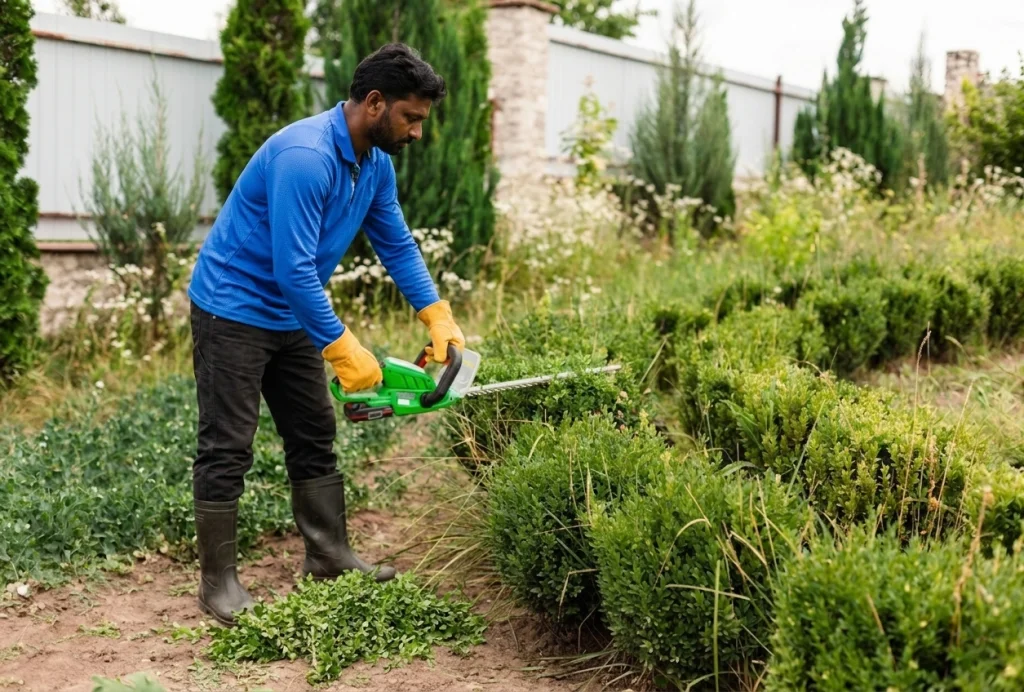
Are you evaluating a landscape maintenance program for your Austin property and trying to understand what separates a properly specified seasonal maintenance plan from the generic mowing-and-blowing services that satisfy basic upkeep while leaving the specific maintenance demands our climate creates unaddressed? Landscape maintenance in Austin is a category where seasonal specification accuracy, mowing height by turf type, irrigation adjustment timing, bed maintenance scheduling, determines whether a landscape investment continues thriving or gradually declines under maintenance that doesn't account for our specific regional demands.
At Doddridge Landscaping, ongoing landscape maintenance is part of our landscape maintenance service across Austin. Here is what proper program specification actually involves.
Mowing Height and Frequency Specification by Turf Type
Bermuda turf mowing specification maintains cutting height between one and two inches during peak summer growth, with mowing frequency increasing to as often as twice weekly during periods of maximum growth rate, since Bermuda grown too tall develops a thatch layer and thinning density that shorter, more frequent mowing prevents.
St. Augustine mowing specification maintains a taller cutting height, typically two and a half to four inches, since this species' broader leaf blade and shallower root structure make it more vulnerable to heat and drought stress when cut too short, a common maintenance error that stresses St. Augustine lawns during Austin summers.
Zoysia mowing specification falls between these ranges, typically one to two and a half inches depending on cultivar, with generally lower mowing frequency requirements than Bermuda given its slower growth rate.
Seasonal Fertilization Specification
Spring fertilization application, timed to actual soil temperature reaching consistent 65-degree readings rather than a fixed calendar date, provides the nitrogen application supporting spring green-up and early growing season vigor appropriate to the specific turf type installed.
Summer fertilization specification adjusts nitrogen application downward during Austin's most intense heat, since heavy nitrogen application during peak heat stress can push top growth the root system can't adequately support under drought conditions, a maintenance error that weakens turf precisely when it's under the most environmental stress.
Fall fertilization application, for warm-season turf types common in Austin, supports root system energy storage heading into winter dormancy rather than promoting the top growth that spring and summer applications prioritize.
Irrigation Schedule Adjustment Specification
As Blog 1 establishes for irrigation system design, a properly specified maintenance program includes scheduled seasonal irrigation adjustment, not a fixed year-round schedule, adjusting run times and frequency according to actual evapotranspiration demand and Austin Water's current drought restriction stage, since a maintenance program that leaves irrigation scheduling static throughout the year either wastes water during cooler months or under-waters during peak summer demand.
Bed Maintenance and Mulch Specification
Mulch depth specification maintains a consistent two to three inch depth across planting beds, replenished on an annual or biannual schedule as organic mulch breaks down, since mulch depth below this range fails to adequately suppress weeds or retain soil moisture during Austin's dry summer stretches.
Pruning schedule specification for ornamental shrubs and specimen plantings follows species-appropriate timing, generally avoiding major pruning during active summer growth stress periods and scheduling structural pruning during dormant winter months for most Central Texas species.
Hardscape Maintenance Integration
As Blog 3 and Blog 2 establish for patio and retaining wall construction, a comprehensive maintenance program includes periodic inspection of hardscape features for settling, cracking, or drainage issues, catching developing problems while they remain minor repairs rather than allowing them to progress into significant structural concerns.
What Landscape Maintenance Programs Cost
Standard residential maintenance programs, including seasonal mowing, fertilization, irrigation adjustment, and basic bed maintenance for a typical Austin suburban lot, typically cost 150 to 350 dollars monthly depending on property size and service scope. Larger properties or those with extensive bed area and specimen plantings requiring more detailed seasonal attention typically run 350 to 700 dollars monthly.
Why Seasonal Specification Accuracy Determines Long-Term Landscape Health
A maintenance program that applies uniform mowing height, fertilization timing, and irrigation scheduling regardless of turf type or season produces landscapes that survive but don't genuinely thrive, showing gradual thinning, increased disease pressure, or stress symptoms that trace back to maintenance specifications that were never adjusted to actual seasonal and species-specific demand.
The team at Doddridge Landscaping provides maintenance programs across Austin specified to the actual seasonal and species-specific demands of your particular landscape.

Want a maintenance program built around your Austin landscape's actual needs? Reach out to Doddridge Landscaping today.
.svg)
.svg)
.svg)

.svg)