




Xeriscape Design in Austin, TX: Plant Palette Selection and Water Budget Standards
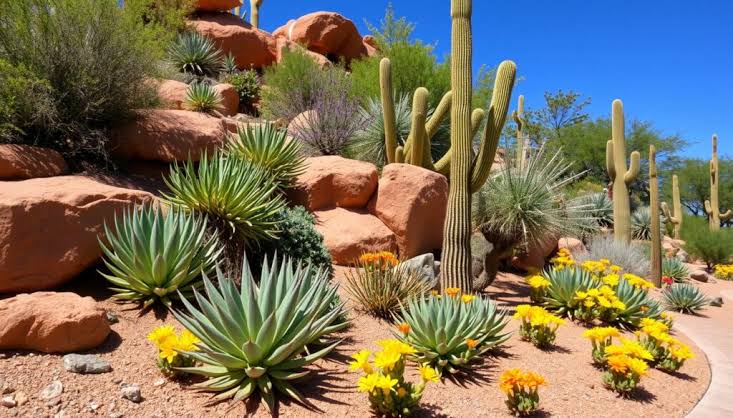
Are you planning a xeriscape conversion for your Austin property and trying to understand what separates a properly designed, water-budgeted landscape from the rock-and-cactus installations that satisfy the general concept of "low water" while leaving genuine plant health, hydrozone accuracy, and long-term visual performance unaddressed? Xeriscape design in Austin is a category where plant selection accuracy and hydrozoning determine whether the finished landscape genuinely thrives on reduced water or simply survives in a stressed, thin state that looks the part without functioning as intended.
At Doddridge Landscaping, xeriscape and drought-tolerant landscape design is part of our landscape design service across Austin. Here is what proper xeriscape design actually involves.
Hydrozone Design and Water Budget Calculation
Hydrozoning separates a property into distinct water-demand groupings, very low water xeric zones, low water adapted zones, and any moderate water zones for turf or high-value ornamental areas, each irrigated independently according to actual demand rather than a single uniform schedule applied across the entire property.
Water budget calculation estimates the property's total annual irrigation demand based on plant selection, hydrozone square footage, and Austin's regional evapotranspiration data, allowing a design to be evaluated against Austin Water's landscape water budget guidance before installation rather than discovering excessive demand after the fact.
Plant Palette Specification for Central Texas Conditions
Very low water xeric zone specification draws from species genuinely adapted to Hill Country conditions without supplemental irrigation once established, including Texas sotol, agave species, yucca, and damianita, selected for the specific microclimate, full sun exposure, reflected heat from adjacent hardscape, and soil drainage conditions of each planting area.
Low water adapted zone specification includes Texas sage, also called cenizo, Turk's cap for partial shade areas, Salvia greggii in its various cultivar colors, and Gulf muhly for seasonal grass texture, species that establish with moderate initial irrigation and transition to significantly reduced supplemental water once root systems mature.
Groundcover and soil coverage specification uses native or well-adapted groundcover species alongside a properly specified mulch layer, three inches of shredded hardwood or native mulch, reducing evaporation and soil temperature swings across bed areas between larger specimen plantings.
Design Integration With Existing Turf Areas
As Blog 6 establishes for sod installation, turf areas retained within a broader xeriscape conversion should be limited to genuinely functional space, active play areas, defined entertaining zones, rather than purely decorative expanses, with Bermuda or Zoysia varieties selected specifically for their comparatively lower water demand relative to St. Augustine in the retained turf zones.
Irrigation Integration for Xeriscape Zones
As Blog 1 establishes for irrigation system design, xeriscape zones require drip irrigation specification distinct from turf zone spray heads, with pressure-compensating emitters delivering water directly to root zones at rates matched to each plant's established water demand, and separate valve zoning ensuring xeric zones can be scheduled on a meaningfully reduced frequency compared to any remaining turf areas.
Soil Preparation for Xeriscape Plantings
Soil amendment specification addresses Austin's dense clay conditions specifically for xeric plantings, many of which require sharper drainage than clay alone provides, incorporating expanded shale or coarse sand into planting zones for species genuinely intolerant of waterlogged root conditions, rather than assuming all drought-tolerant species tolerate poor drainage equally.
What Xeriscape Design and Installation Costs
Xeriscape conversion of an existing turf area, including plant material, soil amendment, mulch, and drip irrigation integration, typically costs 12 to 22 dollars per square foot depending on plant density and specimen size selected. Larger specimen installations, mature agave, sotol, or specimen yucca, add meaningfully to per-area cost given the material cost of larger nursery stock.
Why Plant Palette Accuracy Determines Long-Term Success
A xeriscape landscape designed with species genuinely suited to their specific hydrozone and microclimate typically requires supplemental irrigation only during the first one to two years of establishment, after which root systems mature enough to rely primarily on rainfall. A design that treats "drought-tolerant" as a single uniform category, rather than accounting for genuine differences in water need between and within hydrozones, produces plants that either struggle in zones too dry for their actual needs or receive excess water that undermines the water-saving purpose of the conversion entirely.
The team at Doddridge Landscaping designs xeriscape landscapes across Austin with plant palettes and hydrozoning genuinely suited to Central Texas conditions.

Ready for a xeriscape design built on genuine hydrozone accuracy? Reach out to Doddridge Landscaping today.
.svg)
.svg)
.svg)

.svg)